Smaller and lighter than its predecessor, Vega-C, the latest addition to European light launchers, embodies technical innovations. It offers a modular, flexible, and versatile launch solution, suited to a wide range of low Earth orbit missions.
Vega C, the new lightweight, high-performance launcher
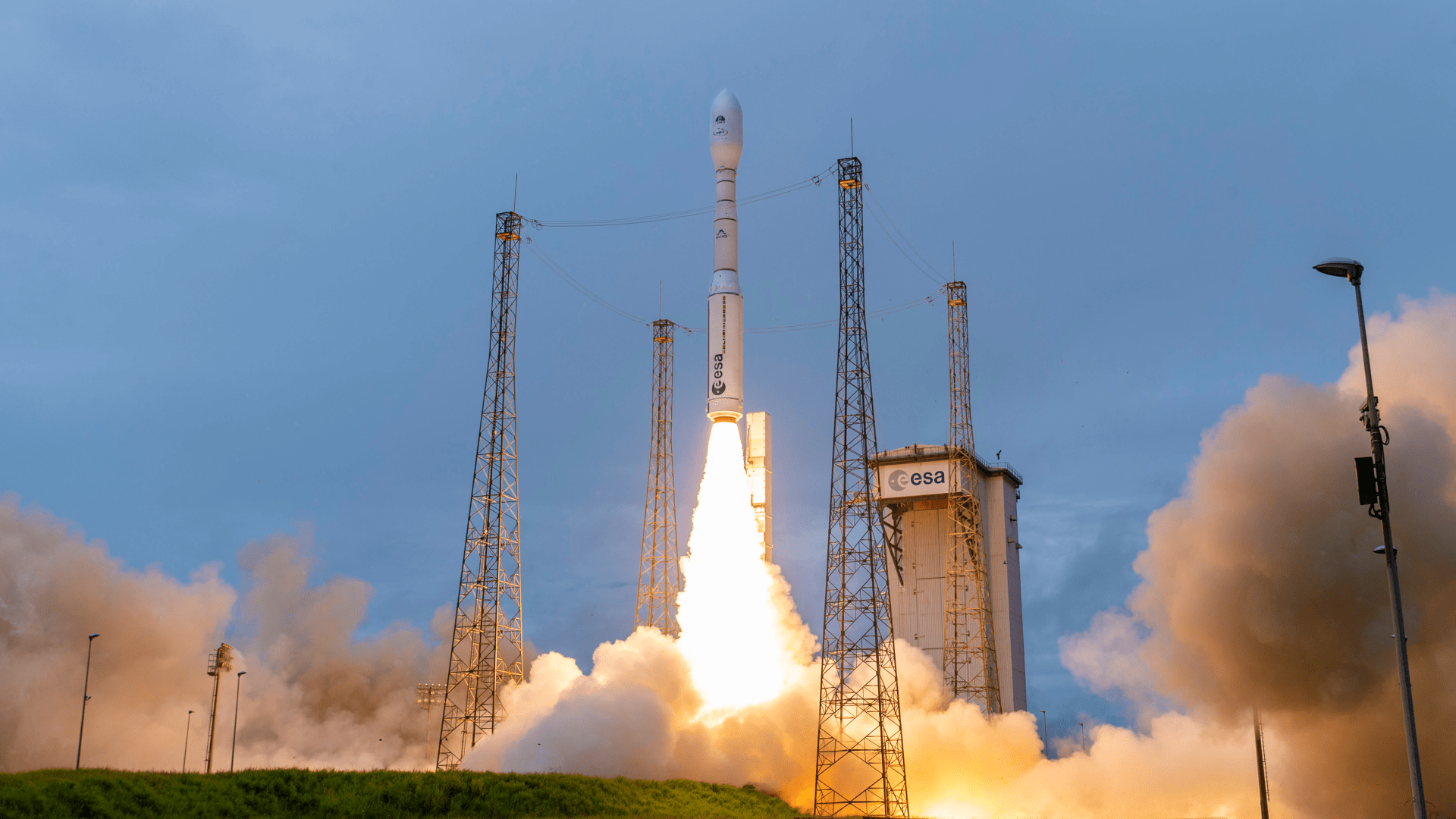
Vega C is powerful, modular and versatile, allowing Arianespace to respond effectively to the needs of its customers in the low-orbit satellite market. With its increased capacities, greater load volume and improved performance, Vega C can fulfil a wide range of missions.
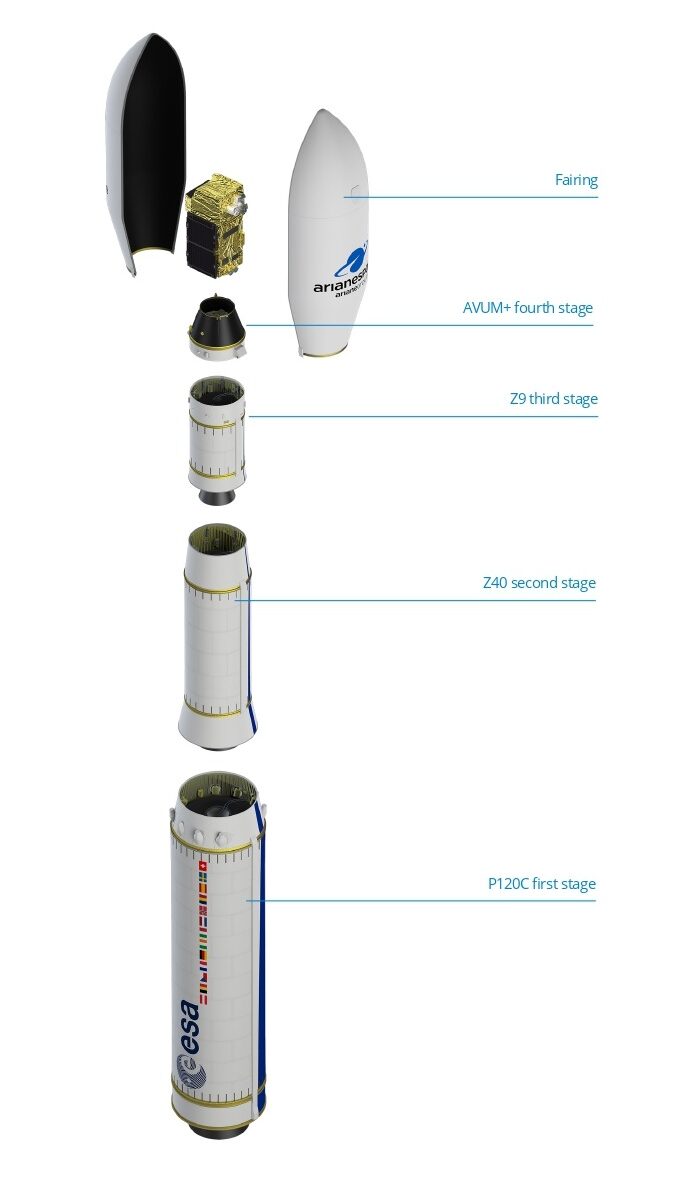
Technical details for the Vega C launcher:
Height: 35 meters
Mass at lift-off: 210 tons
Fairing diameter: 3.5 meters
Lift-off thrust: 4,500 kN (kilonewtons)
Payload capacity: up to 2,300 kg (SSO); 3,300 kg (LEO); 2,500 kg (Polar Orbit)
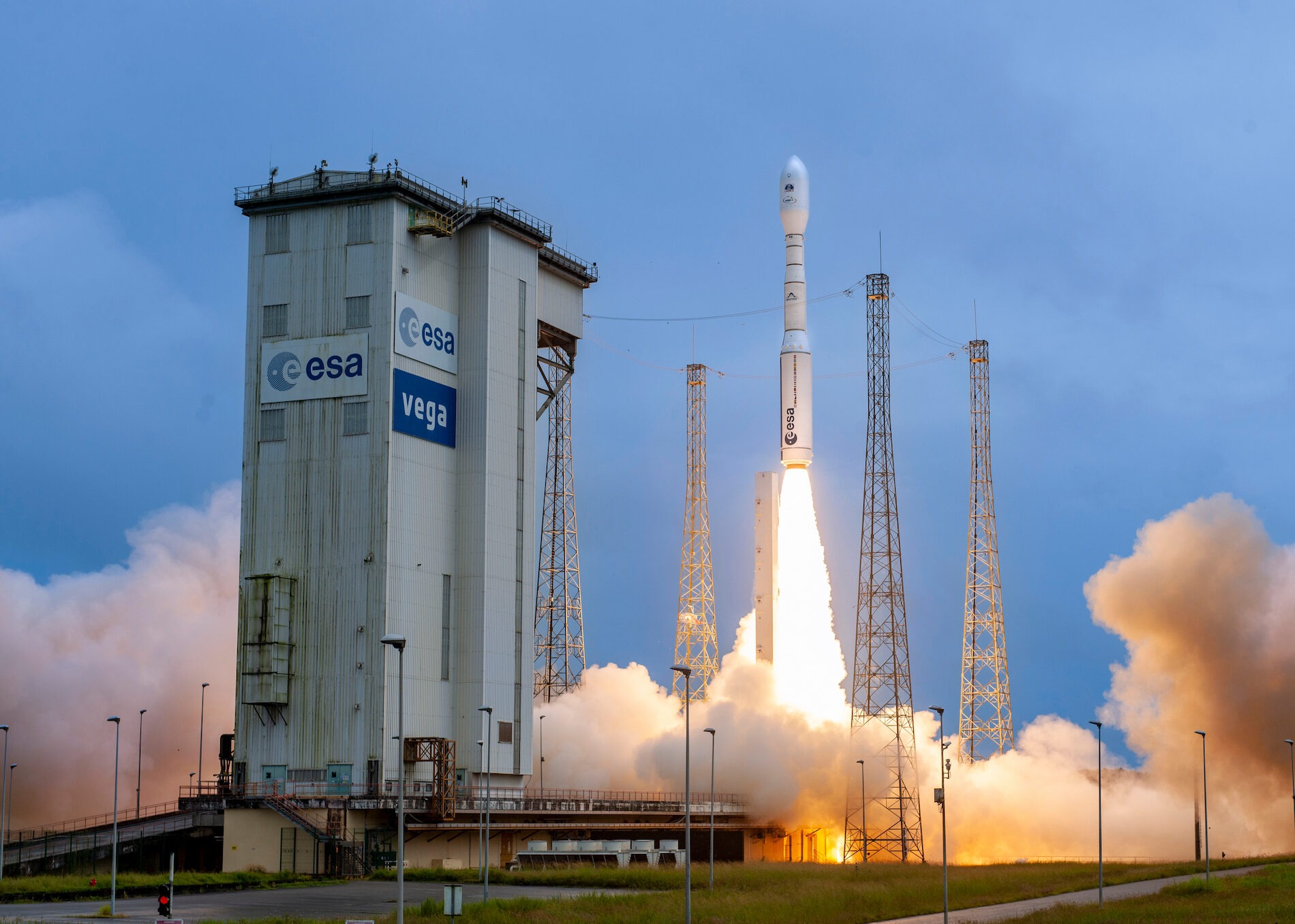
Vega C: enhanced performance and optimized synergies
The Vega C launcher stands out for its superior performance, with an improved injection capacity compared to the first Vega generation. For a 700 km sun-synchronous Earth orbit, the payload capacity of Vega C is 2,300 kg*. These improvements make it possible to meet the growing needs of the market by launching larger and heavier satellites. Furthermore, Vega C uses the P120C first stage which will be upgraded to the P160, used as a side booster for Ariane 6, creating synergies within European launches.
* These performance calculations take into account the safety rules of the Guiana Space Center (CSG).
Modularity and volume
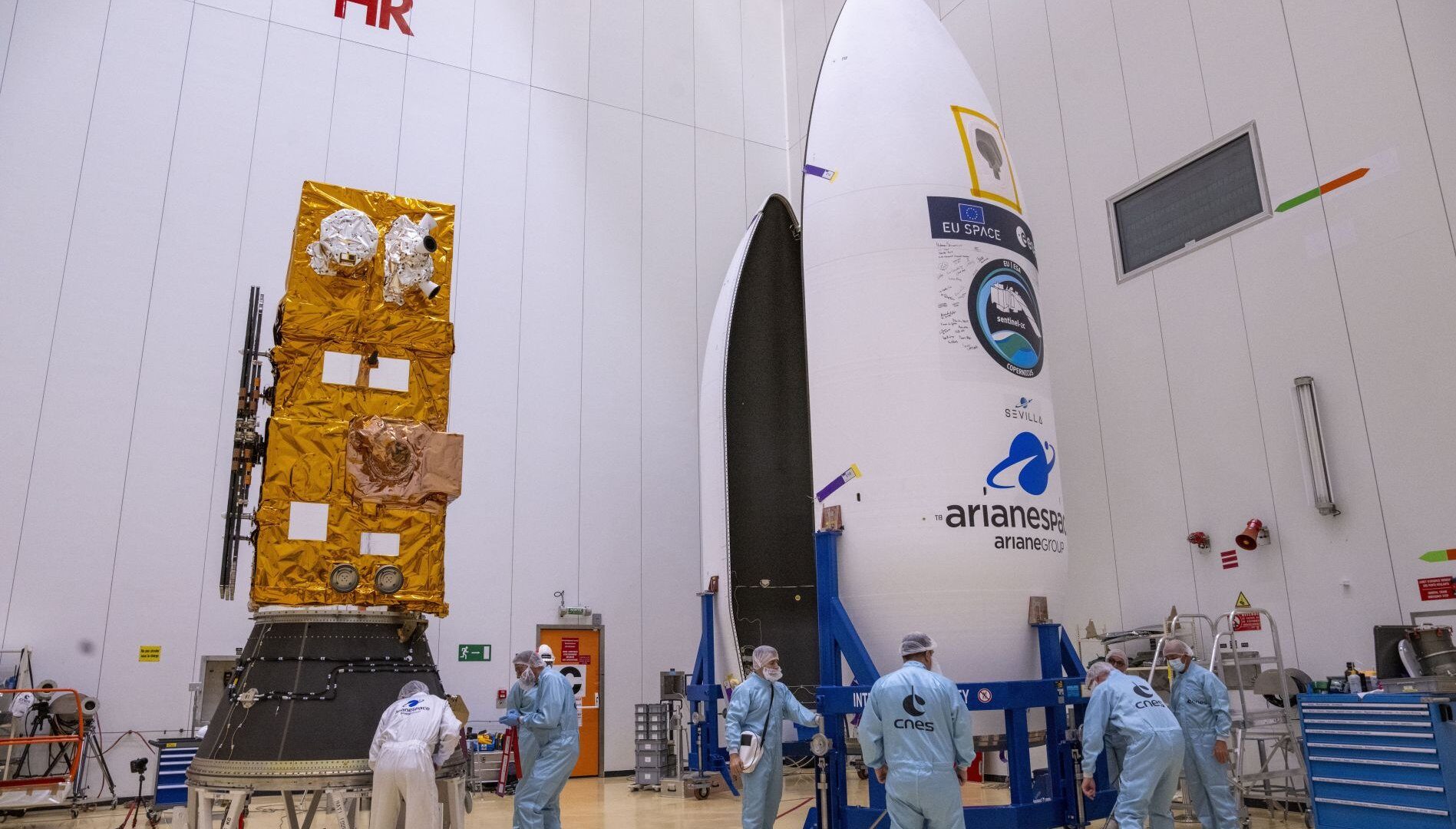
Vega C is a modular launcher with a large-diameter fairing, enabling it to adapt to the requirements of Arianespace customers. This modularity and larger volume enable Vega C to complete a wide range of missions. It can carry small radar and Earth observation satellites as well as nanosatellites and microsatellites through the SSMS (Small Spacecraft Mission Service).
Additionally, Vega C can combine the launch of multiple satellites using modular adapters such as VESPA and VAMPIRE, allowing payloads to be delivered to various orbits in a single launch.
P120C thruster
Capacity to carry small radar and Earth observation satellites
Transport of nanosatellites and microsatellites via the new Small Spacecraft Mission Service (SSMS) launch service
Combination of multiple satellites via VESPA and VAMPIRE modular adapters
Delivery of payloads to multiple orbits in a single launch
Vega C: A unique flexibility with AVUM+
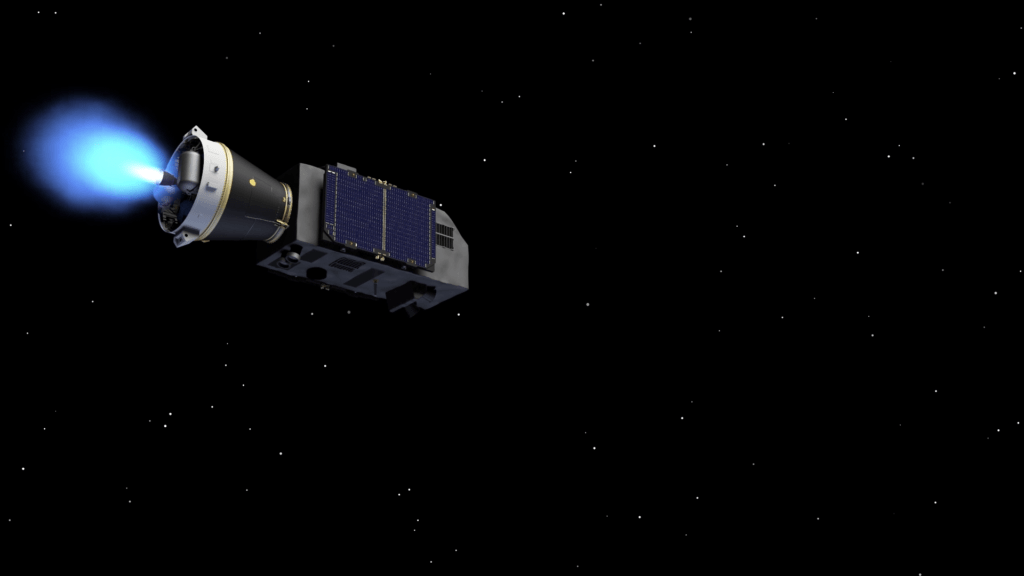
The true advantage of Vega C lies in the flexibility of its AVUM+ upper stage, where the engine can restart up to seven times, allowing it to reach three different orbits. This multiple restart capability makes Vega C ideal for complex missions requiring multiple in-flight adjustments. AVUM+ can also perform precise maneuvers, such as orbital plane changes or altitude raises, thereby maximizing mission efficiency.
The typical profile of a mission with AVUM+ generally includes two ignitions to reach the target orbit: a first ignition to reach an intermediate orbit and a second ignition to reach the final orbit. After satellite separation, the AVUM+ can perform additional maneuvers to release the satellites into their operational orbits or to activate a controlled re-entry into the Earth’s atmosphere, in compliance with environmental regulations.
Launch configurations
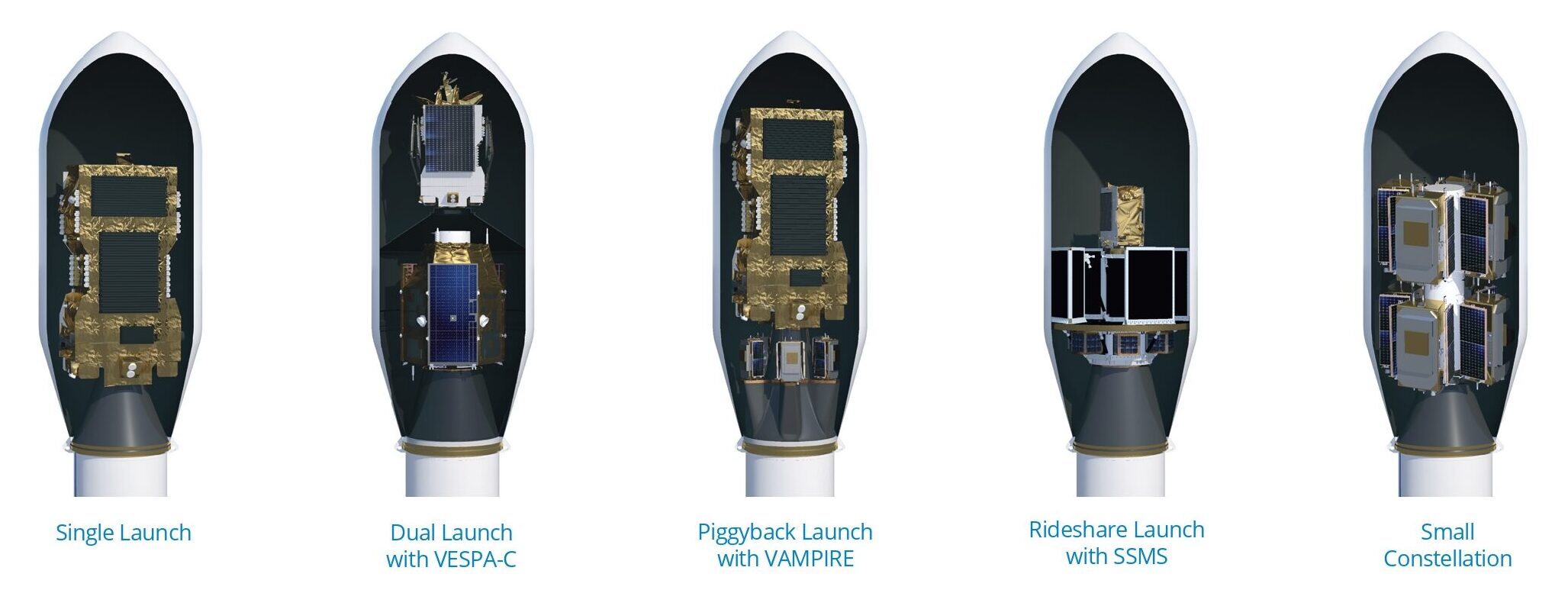
Vega C offers a wide range of launch configurations:
Single launch which consists of carrying a single satellite on Vega C using a standard adapter
Dual launch which allows the transport of two satellites, one in the upper position and the other in the lower position, using the VESPA C dual launch structure
Piggyback launch which offers the possibility of embarking a main satellite and several light satellites or microsatellites, using multiple launch structures such as the VAMPIRE 937 or the SSMS (Small Spacecraft Mission Service)
Rideshare, which offers the same possibilities as piggyback launch, but is specifically designed to optimize the cost of access to space by sharing the launcher’s capacity between several small satellites, ranging from mini satellites to cubesats
Constellation launch, where multiple satellites are deployed in solar synchronous orbit (SSO), using several re-ignitions of the AVUM+ upper stage
An Innovative Solution for Small Satellite Launches
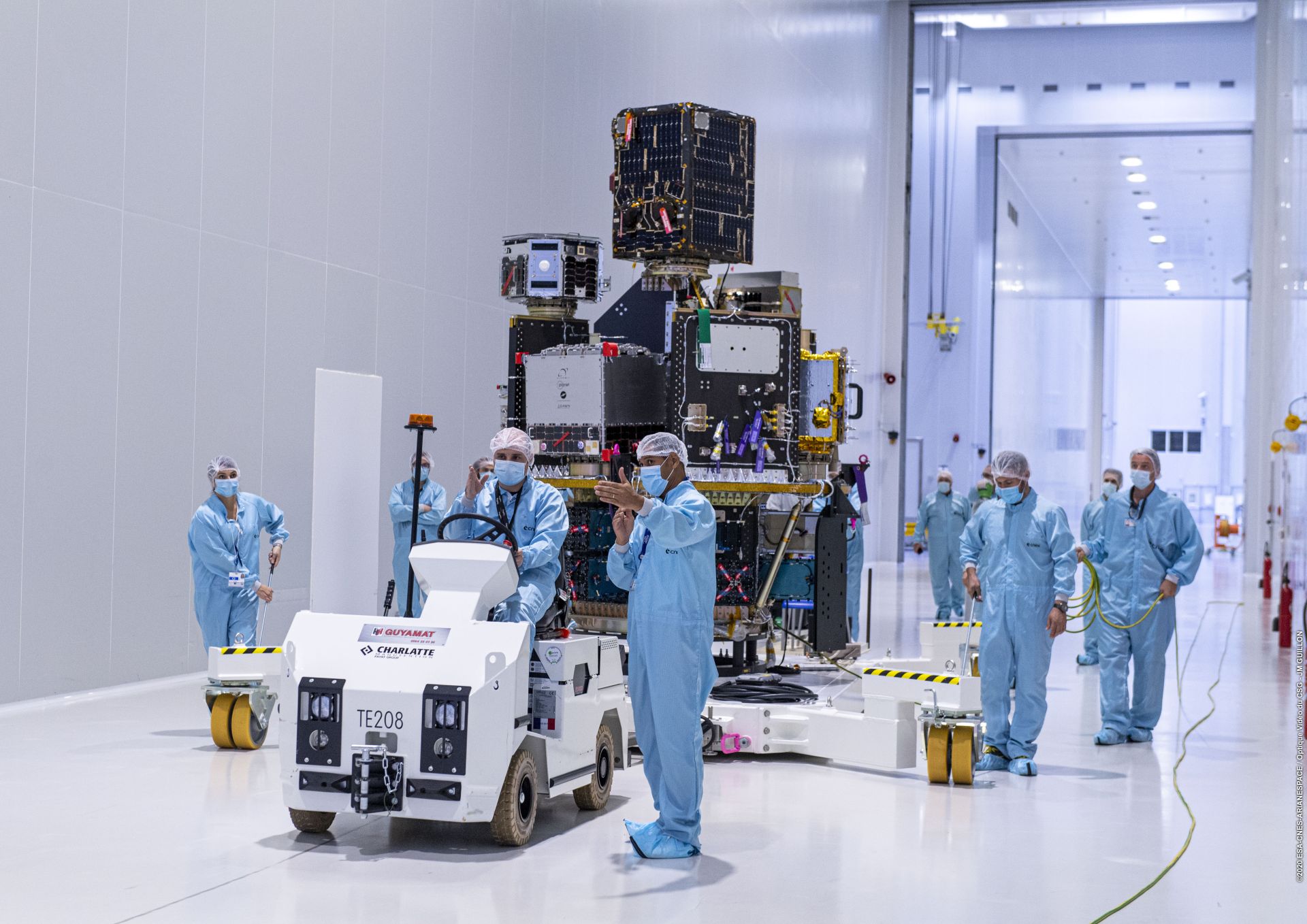
The SSMS (Small Spacecraft Mission Service) is a modular adapter that allows Vega C to offer hosting solutions to carry small satellites ranging from mini satellites to cubesats. This rideshare and piggyback service is designed to optimize the cost of accessing space for small payloads by sharing vehicle capacity.